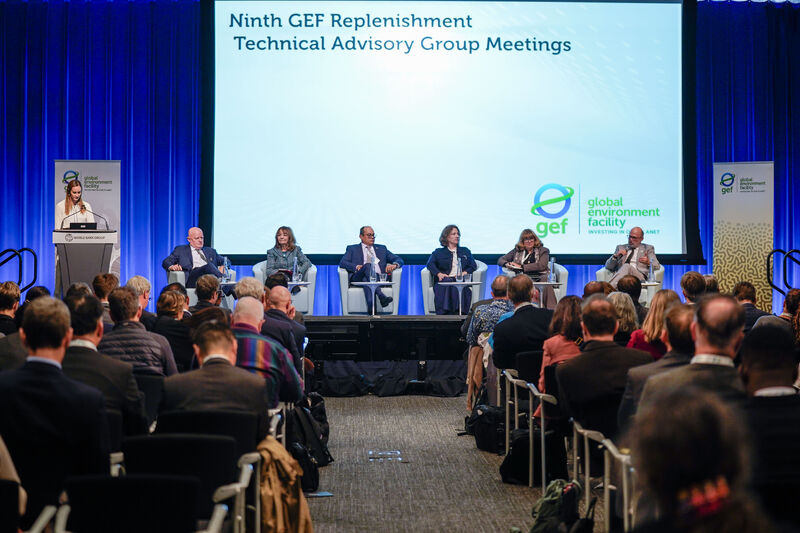
The outcome of the GEF-9 replenishment is more than a funding update. It is a strategic warning to governments, NGOs, CBOs, faith-based organizations, climate enterprises, county institutions, development partners and local implementers working in the climate finance space.
The April 2026 pledge of approximately USD 3.9 billion for the Global Environment Facility’s ninth replenishment represents a significant decline from the record USD 5.33 billion raised under GEF-8. At first glance, this may appear to be another difficult donor cycle. But a closer reading reveals something deeper: the global climate finance architecture is entering a more constrained, selective and politically contested phase.
For institutions working in climate finance, project design, MEAL, donor readiness and implementation, the message is clear. The future will not reward organizations that only have good intentions or urgent community needs. It will reward those that can demonstrate strong evidence, bankable project pipelines, credible implementation systems, measurable impact and the ability to align public finance with wider investment.
GEF-9 is therefore not just about the GEF. It is about the changing rules of climate finance.
1. The headline figure hides a deeper financing reality
The headline number is already significant. A replenishment of USD 3.9 billion is approximately 27 percent lower than GEF-8. In nominal terms, this represents a reduction of about USD 1.43 billion from the previous cycle.
However, the more important issue is not only the size of the replenishment, but the composition of the resources behind it.
The GEF-9 financing structure depends not only on fresh donor pledges, but also on carry-over balances, arrears, investment income and reflows from non-grant instruments. This matters because it suggests that the replenishment is being supported partly by recycled and accumulated resources, not only by new political commitment from donor governments.
That distinction is critical.
Fresh pledges signal confidence, political will and future commitment. Carry-overs, arrears and reflows help close the accounting gap, but they do not necessarily indicate growing donor appetite. In practical terms, GEF-9 suggests that multilateral environmental finance is being stretched at a time when demand for climate and environmental support is expanding.
For developing countries and implementing organizations, this means competition for grant-based climate and environmental finance will intensify. It will no longer be enough to present a project as climate-relevant. Institutions will need to show why their projects are strategically necessary, technically sound, financially credible and implementation ready.

Photo: Ahmed Nayim Yussuf / UNEP
As climate finance becomes more competitive, implementers must move beyond good ideas to bankable, measurable, and partnership-ready programmes.
2. The climate allocation shift is a major policy signal
One of the most striking changes in GEF-9 is the reduced share allocated to the climate change focal area. The climate change focal area reportedly declines from 16 percent under GEF-8 to 9 percent under GEF-9, making it the smallest focal area.
This is not a minor technical adjustment. It is a major policy signal.
Over recent replenishment cycles, some contributors have increasingly argued that the GEF should focus more strongly on non-UNFCCC environmental agreements, especially because dedicated climate finance institutions such as the Green Climate Fund already exist. In principle, this argument has logic. The GEF has a broad environmental mandate covering biodiversity, land degradation, chemicals and waste, international waters and climate change.
The GEF also argues that climate benefits will still be delivered through integrated programming, mitigation co-benefits and blended finance mechanisms. That is true to some extent. Many environmental projects generate climate benefits even when they are not labelled as pure climate projects.
But there is a real accountability concern.
When climate outcomes are embedded within multi-objective programmes, they can become harder to track, attribute and report. This matters for countries trying to meet their commitments under the Paris Agreement. It also matters for transparency, MRV systems and reporting under the Enhanced Transparency Framework.
For African countries, least developed countries and small island developing states, this shift could affect access to dedicated support for transparency, capacity-building and climate reporting. Institutions that depend on GEF resources for climate planning and MRV support will need to pay close attention to final allocation documents and programming guidance.
The lesson is clear: climate finance is becoming less automatic and more integrated. That creates opportunities, but only for institutions that can design projects across multiple benefits while still demonstrating climate relevance with precision.
3. LDCs and SIDS gained protection, but vulnerability is still not fully priced
One positive signal in GEF-9 is the allocation of STAR resources to least developed countries and small island developing states. Approximately 43 percent of STAR allocations will be ring-fenced for LDCs and SIDS combined, with a higher minimum floor for these countries.
This is important. In a constrained replenishment, protecting a significant share of resources for the most vulnerable countries is a meaningful recognition of climate and environmental justice.
However, the outcome remains incomplete.
The proposal to replace GDP as the core allocation index with a multidimensional vulnerability index did not fully succeed. GDP remains a major driver of country envelopes. This is a serious issue because GDP does not adequately capture climate vulnerability, exposure, institutional capacity gaps, debt pressure, ecological fragility or the true cost of adaptation.
For climate-vulnerable countries, especially in Africa, the challenge remains that need and vulnerability are not always translated into predictable finance. Countries may be highly exposed to droughts, floods, food insecurity, ecosystem degradation and climate-related displacement, yet still struggle to access adequate concessional finance.
This is why climate finance readiness is becoming so important. Vulnerability alone does not unlock finance. Vulnerability must be translated into credible investment plans, strong concept notes, measurable indicators, costed interventions, implementation capacity and evidence-based pipelines.
4. Blended finance is becoming central, but it is not a universal solution
GEF-9 also confirms the growing importance of blended finance and non-grant instruments. The Non-Grant Instrument share is expected to rise from 7 percent to 10 percent of the envelope.
This reflects a broader shift across the climate finance architecture. As grant resources come under pressure, donors and funds are increasingly emphasizing leverage, mobilization ratios, guarantees, concessional loans, private capital and investment partnerships.
This direction is understandable. Public resources are limited, while climate needs are enormous. Blended finance can help scale investment in renewable energy, clean transport, green infrastructure, climate-smart value chains, water systems and nature-based enterprises.
But blended finance should not be treated as a magic solution.
Many of the most urgent climate priorities do not generate immediate commercial returns. Adaptation, community resilience, ecosystem restoration, early warning systems, loss and damage responses, institutional capacity-building, gender-responsive programming and local MEAL systems often require grants or highly concessional finance.
If the climate finance system becomes too focused on leverage and private capital, it risks underfunding the very interventions that matter most to vulnerable communities.
This is where climate finance leadership must become more nuanced. The question is not whether blended finance is good or bad. The real question is: which instrument is appropriate for which problem?
Revenue-generating projects may require blended structures. Public-good interventions may require grants. Policy reforms may require technical assistance. Community resilience may require predictable local finance. Strong climate finance design means matching the right financial instrument to the right development challenge.

Photo: UNDP Somalia
The future of climate finance will reward institutions that can translate funding into visible resilience outcomes for vulnerable communities.
5. What GEF-9 signals for the Green Climate Fund
The GEF and the Green Climate Fund are different institutions with different mandates. But they depend on the same fundamental variable: donor willingness to pledge and deliver resources.
That is why GEF-9 matters for the future of the GCF.
Reported reductions in major donor contributions to climate funds illustrate the fiscal and political pressures facing contributor countries. Since GCF contributions are usually encashed over several years, reductions do not only affect the current programming period. They can also affect the cash-flow bridge into future replenishment cycles.
This has implications for GCF-3.
The next phase of GCF financing is likely to face a more difficult pledging environment. Donors may place stronger emphasis on private sector mobilization, co-financing, financial innovation, country ownership, risk management and measurable transformation. Projects that cannot demonstrate strong evidence, strong economic logic and strong delivery systems may struggle.
For African institutions, this means one thing: preparation must start before the call for proposals.
Too many organizations wait until an opportunity is announced before designing a project. That approach will not work in a tighter climate finance environment. Institutions must begin building climate finance pipelines now. They must develop bankable concepts, strengthen data systems, prepare logframes, build partnerships, map donors, assess risks and document community-level evidence.
In the next era of climate finance, readiness will become a competitive advantage.
6. The bigger structural shift: from expansion to selectivity
GEF-9 may represent more than a difficult replenishment. It may reflect a structural turning point in the political economy of climate finance.
Several forces are converging at the same time: rising debt pressures, defense and security spending, domestic political backlash against aid, energy costs, migration politics, industrial policy priorities and increased competition between climate, biodiversity, humanitarian and development finance.
In this environment, donor governments are likely to become more selective. They will demand stronger justification for every dollar committed. They will ask harder questions about value for money, co-financing, impact, sustainability, governance and risk.
This does not mean climate finance will disappear. But it does mean the rules of access are changing.
The future will favor institutions that can answer five questions clearly:
What problem are you solving?
Where is the evidence?
Why is public finance needed?
How will the project generate measurable impact?
What systems prove that you can deliver?
These questions are not just technical. They are strategic. They separate ordinary project ideas from fundable climate investments.
7. What this means for NGOs, CBOs and local implementers
For NGOs, CBOs, faith-based organizations, youth-led organizations and local climate actors, the implications are direct.
Many local organizations have strong community trust, deep contextual knowledge and real solutions. But they often lack the systems that donors and climate finance institutions require. Their ideas are important, but they are not always packaged in a funder-ready way.
This must change.
Local organizations that want to access climate finance must move from activity-based thinking to investment-ready project design. They must strengthen their theory of change, problem evidence, baseline data, budgets, risk analysis, gender integration, safeguarding systems, MRV frameworks and sustainability plans.
They must also understand the difference between a good community activity and a fundable climate finance project.
A good activity may plant trees. A fundable climate project explains survival rates, carbon benefits, watershed impact, livelihood outcomes, gender inclusion, governance structure, maintenance systems and long-term financing.
A good activity may train youth. A fundable climate project links youth skills to green jobs, enterprise creation, climate adaptation, measurable income outcomes and market demand.
A good activity may support farmers. A fundable climate project demonstrates climate risk, productivity benefits, resilience outcomes, value chain linkages, emissions implications and scalability.
This is the level of readiness the new climate finance environment will demand.
8. The way forward: readiness, evidence and investable pipelines
The conclusion from GEF-9 is not that climate finance is ending. The conclusion is that climate finance is becoming more disciplined.
Public finance will become more contested. Grant resources will become more precious. Blended finance will become more prominent. Donors will ask for stronger proof. Climate funds will prioritize projects that are integrated, scalable, measurable and financially credible.
For developing countries and local implementers, the response should not be panic. It should be preparation.
We need stronger national and subnational climate finance pipelines. We need county-level and community-level projects that are technically sound and investment-ready. We need better MEAL systems, stronger MRV frameworks, credible budgets, bankable concepts and clearer links between climate action and development outcomes.
Above all, we need to defend the purpose of public climate finance.
Private capital has an important role to play, but it cannot replace public responsibility. The Paris Agreement is clear that developed countries have an obligation to provide financial resources to assist developing countries. Mobilization, leverage and alignment are important, but they should not become substitutes for predictable, accessible and concessional public finance.
GEF-9 is therefore a warning and an opportunity.
It warns us that the climate finance landscape is tightening. But it also gives serious institutions a chance to prepare better, design smarter and position themselves more strategically.
At Agenda Beyond Borders, our work is built around this reality. We support organizations to become donor-ready, climate finance-ready and evidence-ready. We help translate strong ideas into fundable concepts, credible proposals, MEAL frameworks, donor pipelines and investment-ready climate programmes.
The future of climate finance will not belong to those who only ask for funding.
It will belong to those who can prove impact, manage risk, structure finance and deliver transformation.
That is the new climate finance discipline. And the time to prepare is now.
Sources: GEF press release, April 9, 2026; GEF Council press release, June 3, 2026; GEF-9 replenishment negotiation notes, January 21, 2026; GEF financial considerations document GEF/R.9/15/Rev.01, January 2026; GCF GCF-2 replenishment documentation; Climate Change News, May 14, 2026; Carbon Brief, May 15, 2026.